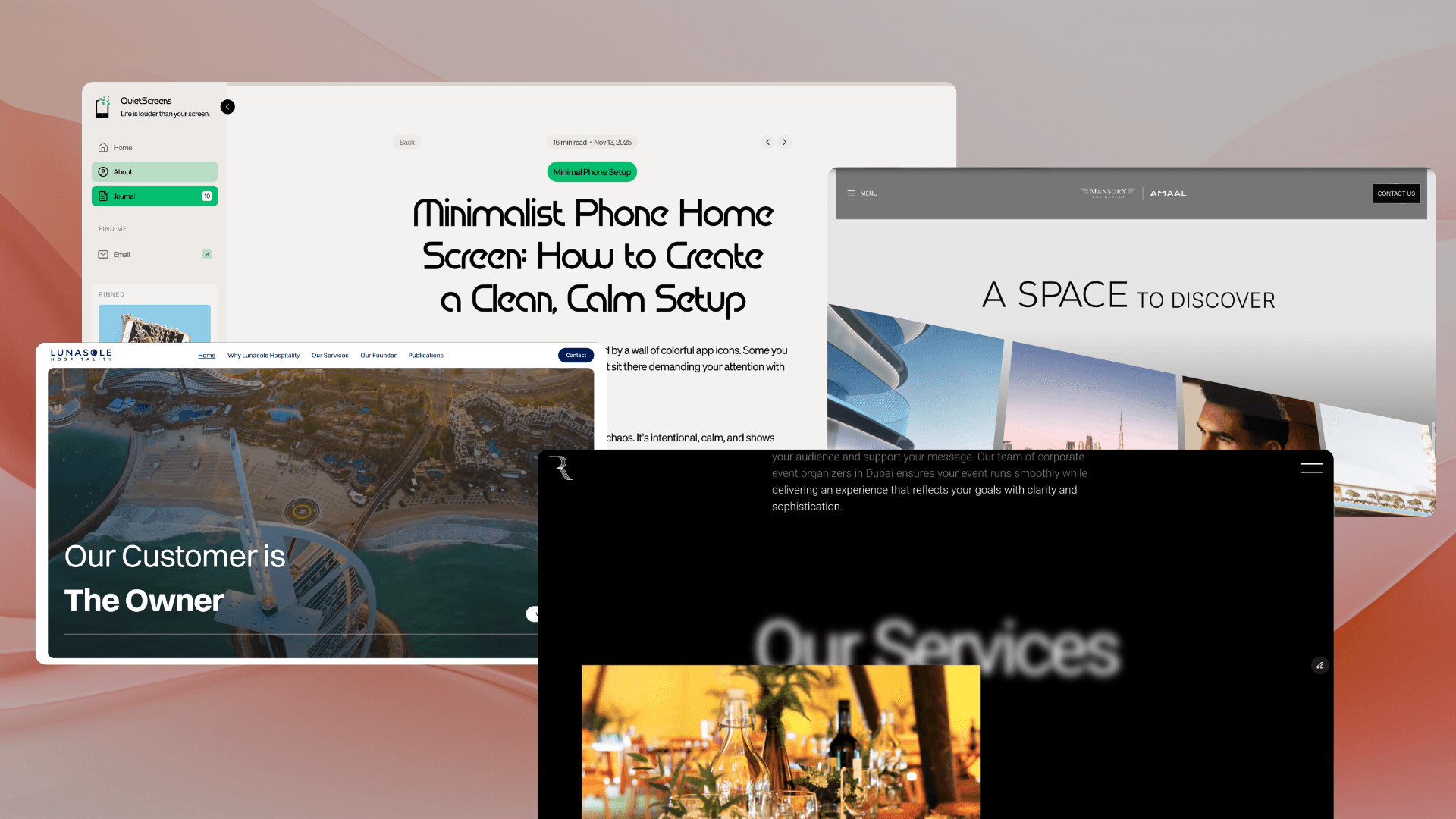
Bespoke website design means building a website completely from scratch, custom coded to your exact specifications rather than starting with a template or theme. No dragging and dropping pre-made sections. No choosing from a gallery of designs that hundreds of other businesses are also using. Everything is built specifically for you.
This sounds appealing in theory. In practice, it's expensive, time consuming, and often overkill for what most businesses actually need. But for some businesses, at certain stages of growth or with specific requirements, bespoke design isn't just nice to have. It's the only option that actually works.
Let's break down what bespoke design actually involves, how it compares to template based solutions, what it costs, and most importantly, how to figure out if it's the right investment for your business or just an expensive way to get something you could have achieved for a fraction of the price.
What Is Bespoke Website Design?
Bespoke website design is the process of creating a website entirely from the ground up, custom built to match your specific business requirements, branding, and functionality needs. Nothing is pulled from existing templates or themes. The design, structure, features, and code are all created specifically for you.
The word "bespoke" comes from tailoring. A bespoke suit is measured, cut, and sewn for one person. It fits perfectly because it was made for them specifically, not adapted from a standard pattern. Bespoke websites work the same way. They're designed around your business, not the other way around.
This contrasts sharply with template based websites, where you choose from pre-designed layouts and customise colours, fonts, and content within the constraints of what that template allows. WordPress themes, Squarespace templates, Shopify themes, these are all template based approaches. They work well for many businesses. They're faster to launch, cheaper to build, and perfectly adequate for straightforward needs.
Bespoke design makes sense when your business doesn't fit into standard templates. When you need functionality that doesn't exist in plugins or apps. When your brand requires a visual identity that can't be achieved by tweaking someone else's design. When performance, speed, and technical optimisation matter enough to justify the extra investment.
How Bespoke Website Design Works
Building a bespoke website isn't just "design a site and code it." It's a structured process with distinct phases, each critical to the final outcome. Here we will explain how we do process from the discovery call to launch of the website.
Discovery and Strategy comes first. We need to understand your business deeply. What problems are you solving? Who are your customers? What actions do you want site visitors to take? What are your competitors doing? What technical requirements or integrations do you need? This phase involves stakeholder interviews, competitor analysis, user research, and defining clear goals and success metrics.
UX and UI Design follows. User experience design maps out how people will move through your site, what information they need at each step, and how to guide them toward conversion. User interface design translates that structure into actual visual design. We will start with wireframes to show layout and structure without visual polish. Mockups add branding, imagery, and polish. You review and approve designs before any code gets written, because changing design after development starts could add extra fees.
Development and Testing is where designers hand off to developers who write the actual code that makes the site function. Our team of front end developers build what users see and interact with while the back end developers build databases, server logic, and integrations with other systems. Everything gets tested extensively across devices, browsers, and screen sizes. Performance optimization happens here, ensuring the site loads fast and runs smoothly.
Launch and Optimization brings the site live, but the work doesn't stop there. Post launch monitoring catches issues that only appear with real traffic. Analytics tracking gets implemented properly. Ongoing optimization improves conversion rates, fixes user experience problems, and adapts to changing business needs.
This process typically takes three to six months for a substantial bespoke site (depending on the number of pages), sometimes longer for complex projects with many integrations or custom functionality. Template sites launch in weeks. This timeline difference matters when deciding which approach fits your situation.
Bespoke vs Template Website: Key Differences
Understanding what you actually gain and lose with each approach helps cut through the sales pitches.
Customization: Templates constrain you to their structure and capabilities. You can change colors and swap images, but fundamental changes to layout, functionality, or structure range from difficult to impossible. Bespoke sites let you build exactly what you need without compromise.
Performance: Template sites carry baggage. Themes include code for features you'll never use, slowing everything down. Bespoke sites include only what you need, resulting in faster load times, better mobile performance, and higher Google rankings since page speed affects SEO.
SEO Structure: Templates make SEO decisions for you, sometimes poorly. URL structures, heading hierarchies, schema markup, and technical SEO elements are predetermined. Bespoke sites let you architect everything for optimal search performance from the beginning.
Scalability: Templates work until they don't. As your business grows and needs evolve, you hit walls where the template simply can't do what you need. Bespoke sites are built to grow with you, accommodating new features and functionality without requiring a complete rebuild.
Cost: Templates are dramatically cheaper upfront. Premium WordPress themes cost $60 to $200. Premium Shopify themes cost $180 to $400. Bespoke sites start at $10,000 and go up from there, often significantly. This cost difference is the main reason most businesses start with templates and only move to bespoke when they've outgrown template limitations. As a digital marketing agency, it also give us an overview of how important you value your company. During 2025, with AI becoming a "website designer" on his own, websites feels now undervalued and used as a tool. Remind that your website company is your online window shop in the huge "Google" street. You need to value your website same as you value your physical shop.
Timeline: Template sites launch in days or weeks. Bespoke sites take months. If you need something live quickly, templates win by default.
The right choice depends on your stage, budget, and requirements. Most new businesses should start with templates. Growing businesses with specific needs often find templates limiting. Established businesses serious about differentiation and performance usually benefit from bespoke.
Benefits of Bespoke Website Design
When bespoke design is the right choice, the advantages are substantial and compound over time.
Unique Brand Identity that actually stands out. Every template site shares DNA with hundreds of other sites using the same theme. Subtle similarities in layout, structure, and interaction patterns make everything feel generic. Bespoke design creates visual and experiential uniqueness that's impossible to achieve with templates. Your site looks and feels like yours alone.
Improved User Experience through intentional design. Templates are built for general use cases, not your specific audience and goals. Bespoke design lets you craft every interaction around how your actual users behave and what they need. This translates directly to higher conversion rates because the entire experience guides users toward actions that benefit your business.
Better SEO Foundation from technical excellence. Bespoke sites can be architected from the ground up for search performance. Clean code, optimal site structure, fast load times, proper schema markup, and technical SEO best practices built in from day one rather than bolted on afterward. This creates a significant advantage in competitive industries where rankings matter.
Scalability for Growth without rebuilding. Templates eventually limit you. Bespoke sites are built to evolve. Adding new features, integrating new systems, expanding functionality, all of this happens within the existing framework rather than requiring migration to a new platform or complete redesign.
Competitive Advantage in crowded markets. When your competitors all use the same Shopify themes or WordPress templates, visual similarity makes differentiation difficult. Bespoke design lets you create experiences that competitors literally cannot replicate without also investing in custom development.
These benefits matter most for businesses where online presence directly impacts revenue, where user experience affects conversion meaningfully, and where standing out from competitors creates tangible business value.
Potential Drawbacks to Consider
Bespoke website design isn't universally better. It comes with real downsides that make it the wrong choice for many businesses.
Higher Upfront Investment is the obvious one. Where template sites cost hundreds to low thousands, bespoke starts at $10,000 and often runs $30,000 to $100,000+ depending on complexity. For new businesses or those with limited budgets, this investment might not make sense no matter how beneficial the outcomes.
Longer Development Timeline means waiting months to launch. If you need a site live next month, bespoke isn't an option. Templates let you launch quickly, start generating traffic and leads, and iterate based on real user behavior. Sometimes speed matters more than perfection.
Requires Professional Expertise for maintenance and updates. With template sites, you can often make basic changes yourself or hire affordable freelancers. Bespoke sites typically require the original agency or similarly skilled developers for significant changes, creating ongoing dependency and potentially higher long term costs.
Risk of Over Engineering is real. Some agencies push bespoke solutions when simpler approaches would work fine, either because they prefer custom work or because it generates higher fees. Not every business needs fully custom everything. Sometimes a premium template with light customization delivers 90% of the value at 20% of the cost.
These drawbacks don't make bespoke design bad. They make it inappropriate for certain situations. The key is honest assessment of whether your specific business, at its current stage, actually benefits enough from bespoke to justify the investment and timeline.
How Much Does Bespoke Website Design Cost?
Bespoke website pricing varies enormously based on complexity, features, and who's building it.
Small Business Bespoke Sites typically range from $10,000 to $30,000. This gets you a professionally designed, custom coded site with 5 to 15 pages, responsive design, basic SEO optimization, and straightforward functionality. Not complex integrations or custom applications, but a solid, well built site that represents your brand properly.
Mid Market Business Sites range from $30,000 to $100,000. This includes more sophisticated design, custom functionality, integration with CRM or marketing automation tools, advanced SEO work, and more complex information architecture. E-commerce sites with custom checkout experiences or content heavy sites with custom content management systems often fall in this range.
Enterprise Bespoke Sites start at $100,000 and can exceed $500,000. These involve complex functionality, multiple system integrations, extensive user testing and research, custom web applications, advanced personalization, and ongoing optimization and support. Large organizations with specific compliance requirements, security needs, or highly custom workflows operate in this range.
Factors Influencing Cost include number of pages and templates, custom functionality requirements, third party integrations, e-commerce capabilities, content management needs, multilingual support, accessibility compliance, ongoing support and maintenance contracts, and the agency's expertise and location.
From an ROI perspective, bespoke design should pay for itself through improved conversion rates, better user experience, stronger brand positioning, or operational efficiencies. If a $50,000 site improves conversion rate by just 1% and you're doing $2 million in annual revenue, that's $20,000 additional revenue annually. The site pays for itself in two and a half years, then continues delivering value.
Who Needs a Bespoke Website?
Not everyone benefits equally from bespoke design. These situations typically justify the investment.
Growing Businesses that have outgrown template limitations. You've customized your Shopify theme as far as possible. You're hitting technical walls. Workarounds are getting expensive. This is when bespoke makes sense.
E-commerce Brands in competitive markets where user experience directly impacts sales. If your average order value is high or your product requires education before purchase, a custom designed experience optimized for your specific customer journey can dramatically improve conversion.
SaaS Companies needing to demonstrate technical sophistication. Your website is your product showcase. A generic template undermines credibility. Bespoke design signals that you invest in quality and understand user experience.
Enterprises with Custom Workflows that don't map to standard templates. You need specific integrations, complex user permissions, custom data handling, or functionality that simply doesn't exist in off the shelf solutions.
Companies in Competitive Industries where differentiation matters. If all your competitors use similar templates, bespoke design creates visual and functional distinction that's difficult to copy.
Conversely, new businesses testing product market fit, solopreneurs with limited budgets, businesses with simple informational needs, and companies in industries where online presence is secondary can almost always succeed with template based solutions initially.
How to Choose a Bespoke Web Design Agency
Choosing the right agency matters as much as choosing bespoke design itself. The wrong agency delivers an expensive site that doesn't meet your needs. The right agency delivers a strategic asset that drives business growth.
Evaluate Their Portfolio not just for visual appeal but for relevance. Do they have experience in your industry? Have they built sites with similar functionality to what you need? Can they show measurable results from previous projects?
Assess Technical Expertise beyond design. Can they handle complex integrations? Do they understand performance optimization? What's their approach to SEO? What technologies and frameworks do they use, and why?
Check Industry Experience because domain knowledge matters. An agency that understands e-commerce logistics, subscription business models, or B2B sales cycles will design better solutions than one learning your industry while building your site.
Understand Their Process for communication and collaboration. How do they handle feedback? What does their revision process look like? How often will you have check-ins? Mismatched communication expectations cause most agency-client relationship failures.
Clarify Post-Launch Support before signing anything. What happens after launch? Is ongoing support included? How are bug fixes handled? What does maintenance cost? Who owns the code and design files?
Red flags include agencies promising unrealistic timelines, refusing to share detailed proposals before commitment, lack of clear project management processes, inability to explain technical decisions, and defensive reactions to questions about their approach.
Final Thoughts
Bespoke website design is not inherently better than template based solutions. It's different, with specific advantages that matter tremendously in certain situations and matter not at all in others.
For most new businesses, starting with a template makes perfect sense. Launch quickly, validate your business model, learn what your users actually need, then invest in custom design once you understand your requirements and have revenue to support the investment.
For growing businesses hitting template limitations, bespoke design often becomes necessary rather than optional. The question shifts from whether you need it to when you make the investment.
For established businesses in competitive markets where user experience drives revenue, bespoke design is typically worth the investment multiple times over through improved conversion, stronger brand positioning, and better scalability.
The decision comes down to honest assessment of where your business is, what you actually need, and whether bespoke design's benefits justify its costs and timeline for your specific situation. Don't let agency sales pitches or competitor pressure push you into investments that don't make sense for your stage and goals.
Start by defining what success looks like for your website. If you can achieve those goals with a template, do that. If template limitations prevent you from achieving your goals, then bespoke becomes not just an option but the only real solution.
FAQs
What does bespoke website design mean?
Bespoke website design means building a website completely custom from scratch rather than starting with a pre-made template or theme. Everything including the design, code, functionality, and structure is created specifically for your business and requirements. It's the digital equivalent of a custom tailored suit versus buying off the rack.
Is bespoke website design better than WordPress themes?
Better depends on your needs. Bespoke offers more customization, better performance, and greater scalability. WordPress themes are faster to launch, dramatically cheaper, and perfectly adequate for many businesses. New businesses usually benefit more from WordPress themes initially. Growing businesses often outgrow theme limitations and benefit from bespoke. Neither is universally better, just appropriate for different situations.
How long does it take to build a bespoke website?
Most bespoke websites take three to six months from initial discovery to launch. Simple sites might complete in two months. Complex sites with extensive custom functionality, integrations, or e-commerce features can take eight months or longer. The timeline includes discovery, design, development, testing, and revisions. Template sites launch in weeks, making them better choices when speed matters more than customization.
Is bespoke web design worth the cost?
Worth is relative to your business goals and stage. For new businesses testing product market fit, probably not. The ROI isn't there yet. For growing businesses hitting template limitations or enterprises where online experience directly impacts revenue, bespoke typically pays for itself through improved conversion rates, better user experience, and competitive differentiation. Calculate expected ROI before committing.
Can small businesses afford bespoke website design?
Some can, many can't or shouldn't. Bespoke sites start around $10,000 for basic projects and typically run $30,000 to $100,000 for most small businesses. Whether this makes sense depends on your revenue, margins, and how critical your website is to business success. An e-commerce business doing $500,000 annually can likely justify a $30,000 site. A local service business doing $100,000 annually probably can't.
What is the difference between bespoke web design and custom web development?
The terms are often used interchangeably but can mean slightly different things. Bespoke web design typically refers to the entire process, both design and development, being custom. Custom web development sometimes refers specifically to the coding and functionality work, potentially applied to customizing an existing template. In practice, most agencies use both terms to mean the same thing: building a site from scratch rather than using templates.